How to use the abstract word counter
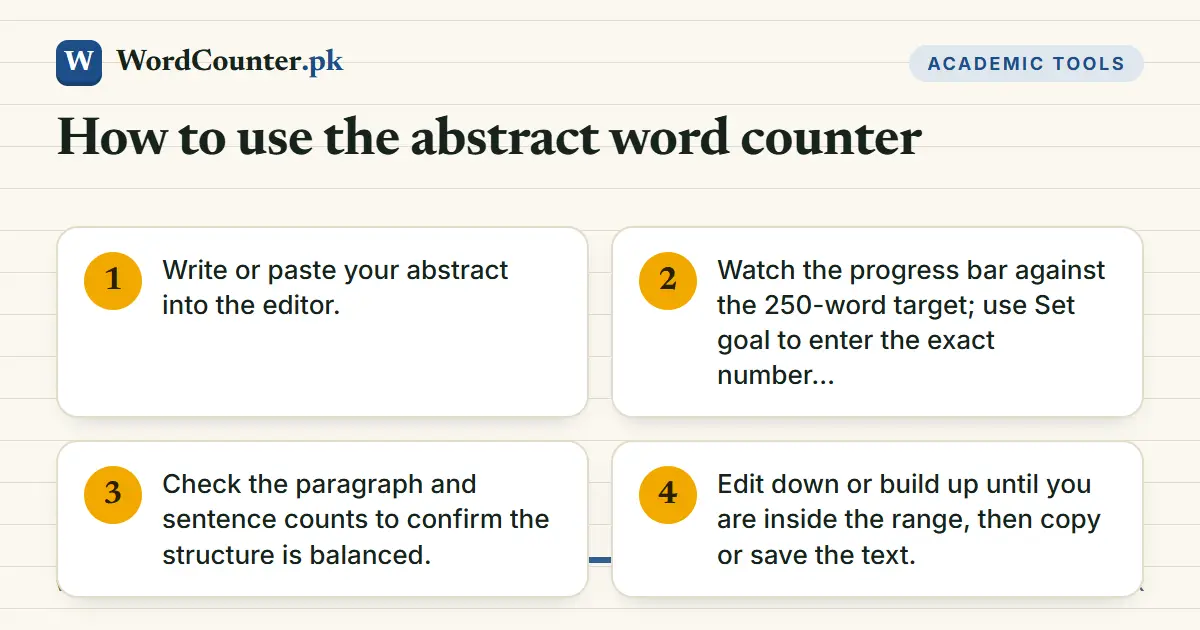
- Write or paste your abstract into the editor.
- Watch the progress bar against the 250-word target; use Set goal to enter the exact number in your brief.
- Check the paragraph and sentence counts to confirm the structure is balanced.
- Edit down or build up until you are inside the range, then copy or save the text.
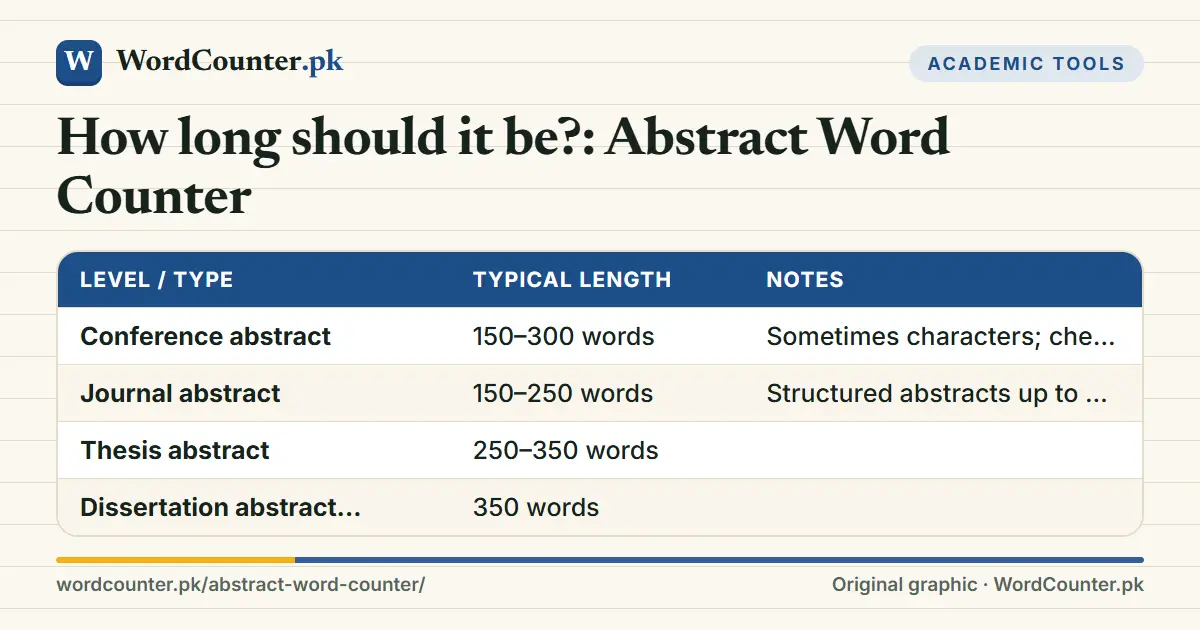
How long should it be?
| Level / type | Typical length | Notes |
|---|---|---|
| Conference abstract | 150–300 words | Sometimes characters; check the call |
| Journal abstract | 150–250 words | Structured abstracts up to 300 |
| Thesis abstract | 250–350 words | |
| Dissertation abstract (ProQuest) | 350 words |
Lengths here are common expectations, not rules. Your brief, supervisor or awarding body sets the real requirement, including what is excluded from the count.
What an abstract must contain
A good abstract states the problem, the method, the main results and the conclusion in that order, with no citations, abbreviations or new information. Structured abstracts use headings such as Background, Methods, Results and Conclusion. Measure each part: 20 percent background, 25 percent methods, 35 percent results and 20 percent conclusion is a sound split for 250 words.
Cutting to the limit
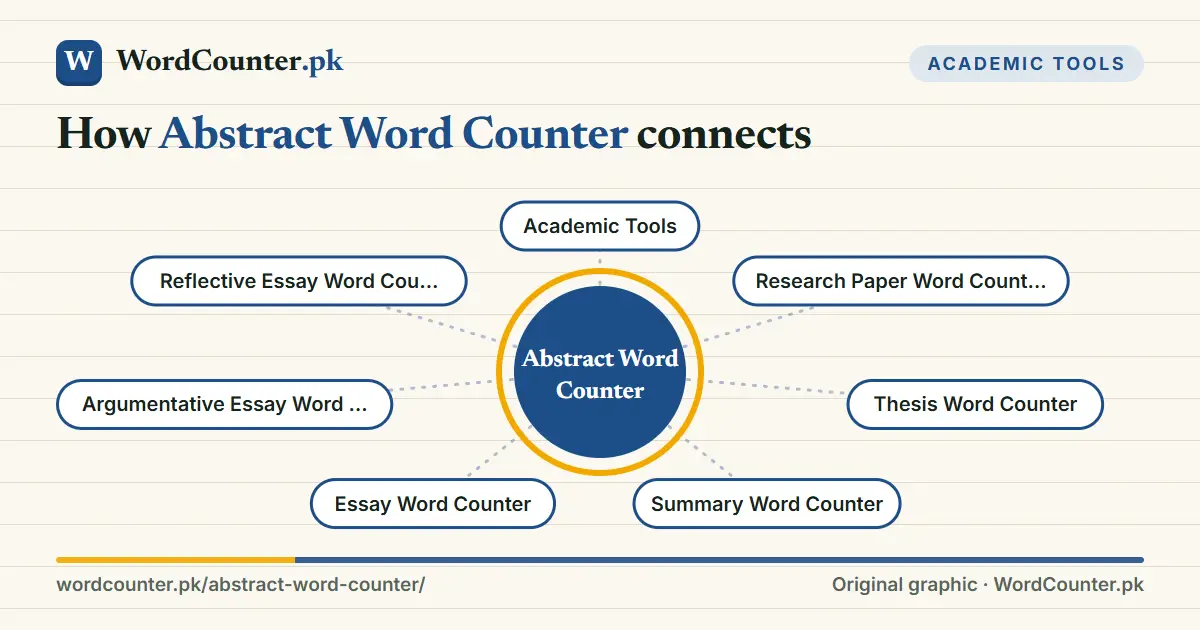
Remove background that the introduction repeats, delete hedging phrases and replace long expressions with a single word. If you need more cuts, see How to Reduce Word Count. For the whole paper, use the Research Paper Word Counter; for the personal statement equivalent, see Personal Statement Word Counter.
Frequently asked questions
How long should an abstract be?
Usually 150 to 250 words.
Do keywords count?
Usually not; they are listed separately.
Can an abstract include references?
Generally no.