How to use the alt text character counter
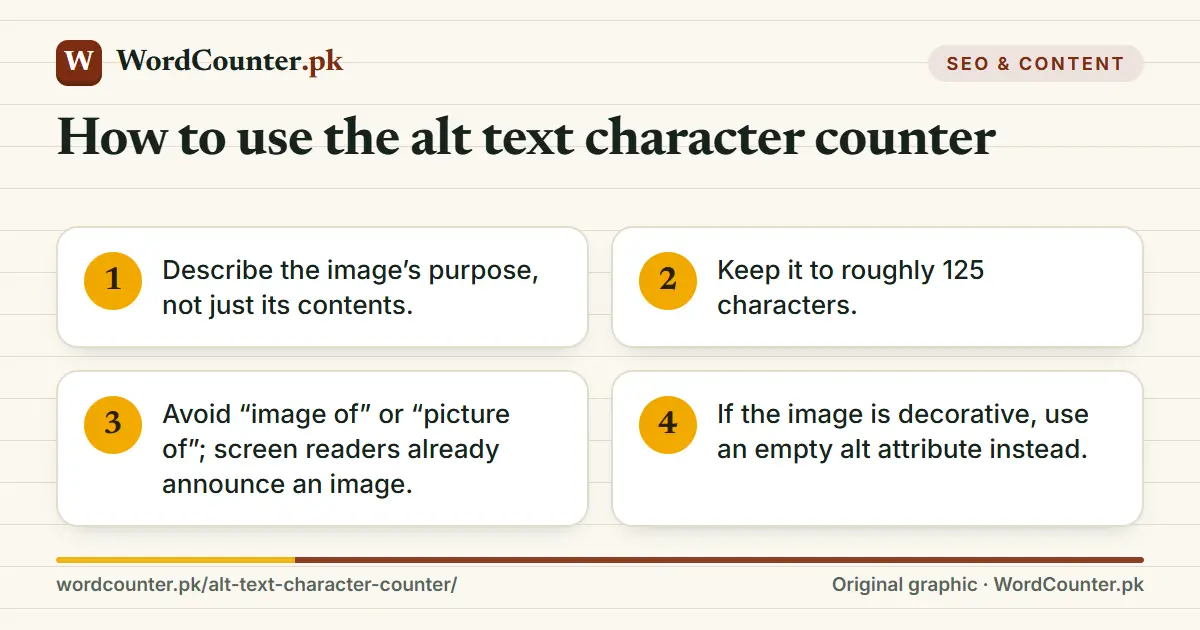
- Describe the image’s purpose, not just its contents.
- Keep it to roughly 125 characters.
- Avoid “image of” or “picture of”; screen readers already announce an image.
- If the image is decorative, use an empty alt attribute instead.
Writing useful alt text
Good alt text conveys the same information the image gives sighted users, in the context of the page. For a product photo, name the product and a distinguishing feature; for a chart, state the main finding and put the data in a table nearby; for a logo link, describe the destination. Some screen readers pause or cut long alt text at about 125 characters, which is why that figure is a rule of thumb, not a standard.
Alt text also helps search engines understand images, but write for people first. Keyword lists are unhelpful and may be treated as spam.
Platform limits
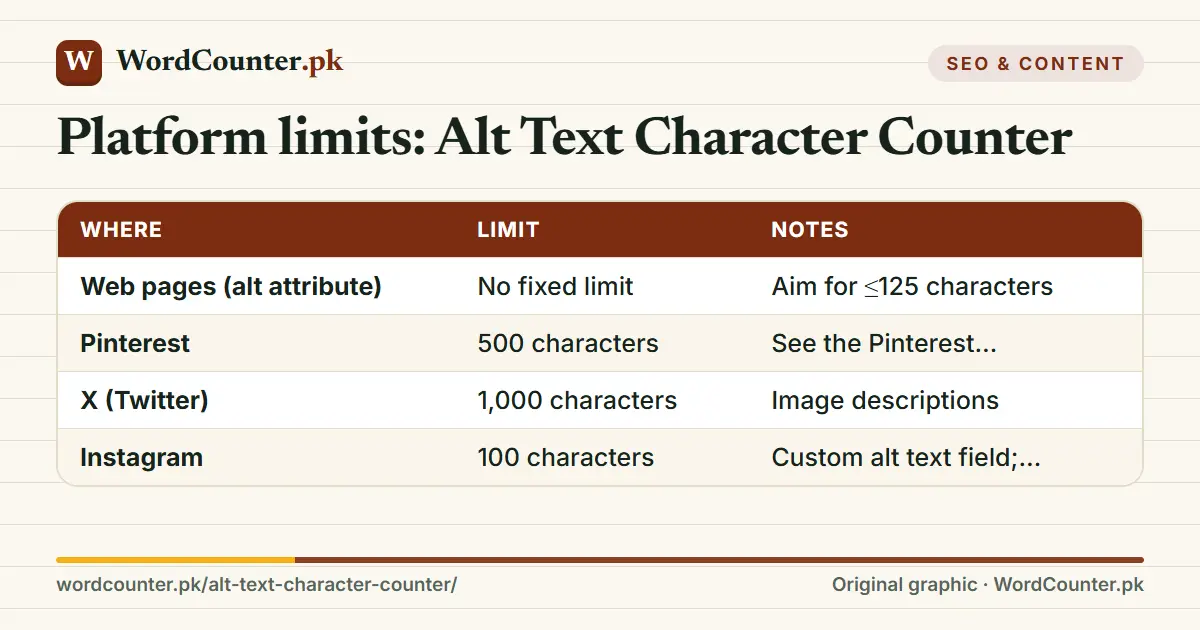
| Where | Limit | Notes |
|---|---|---|
| Web pages (alt attribute) | No fixed limit | Aim for ≤125 characters |
| 500 characters | See the Pinterest Description Character Counter | |
| X (Twitter) | 1,000 characters | Image descriptions |
| 100 characters | Custom alt text field; verify in the app |
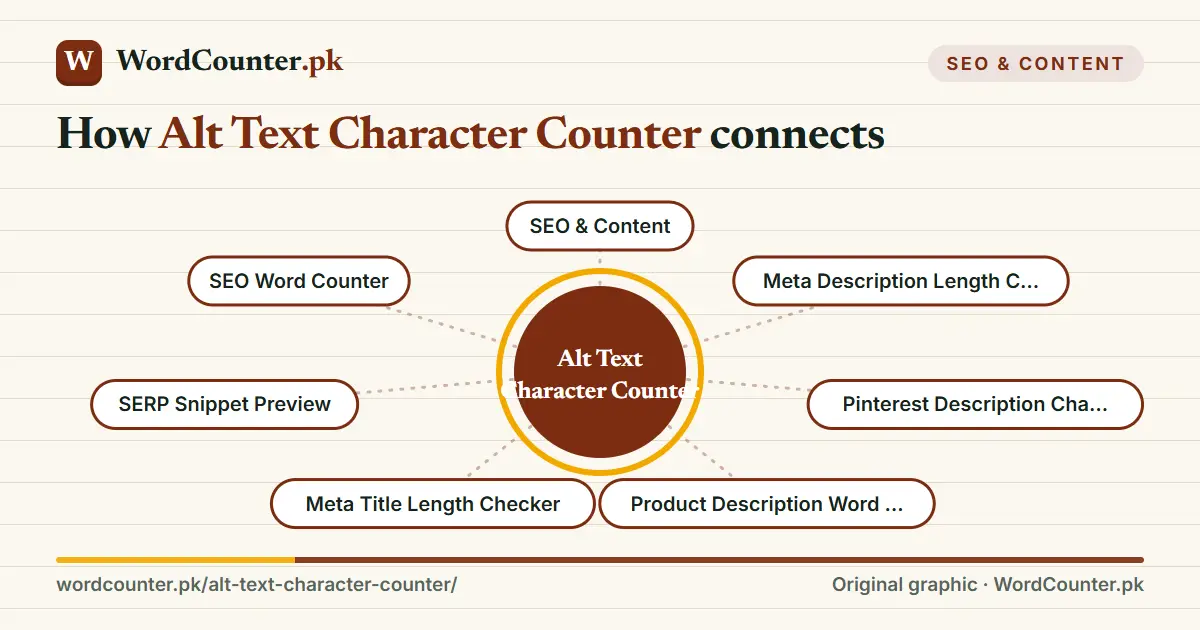
Limits change, so check the platform. For other metadata lengths see the Meta Description Length Checker.
Frequently asked questions
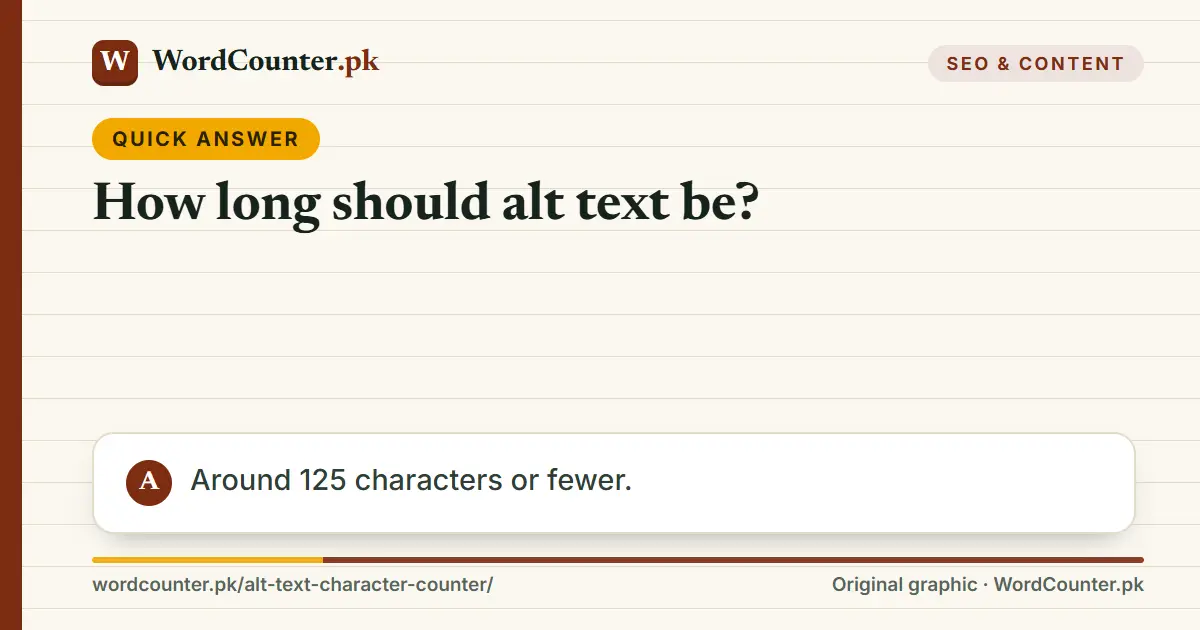
How long should alt text be?
Around 125 characters or fewer.
Should I start with “image of”?
No.
What about decorative images?
Use an empty alt attribute so screen readers skip them.