Reading speeds
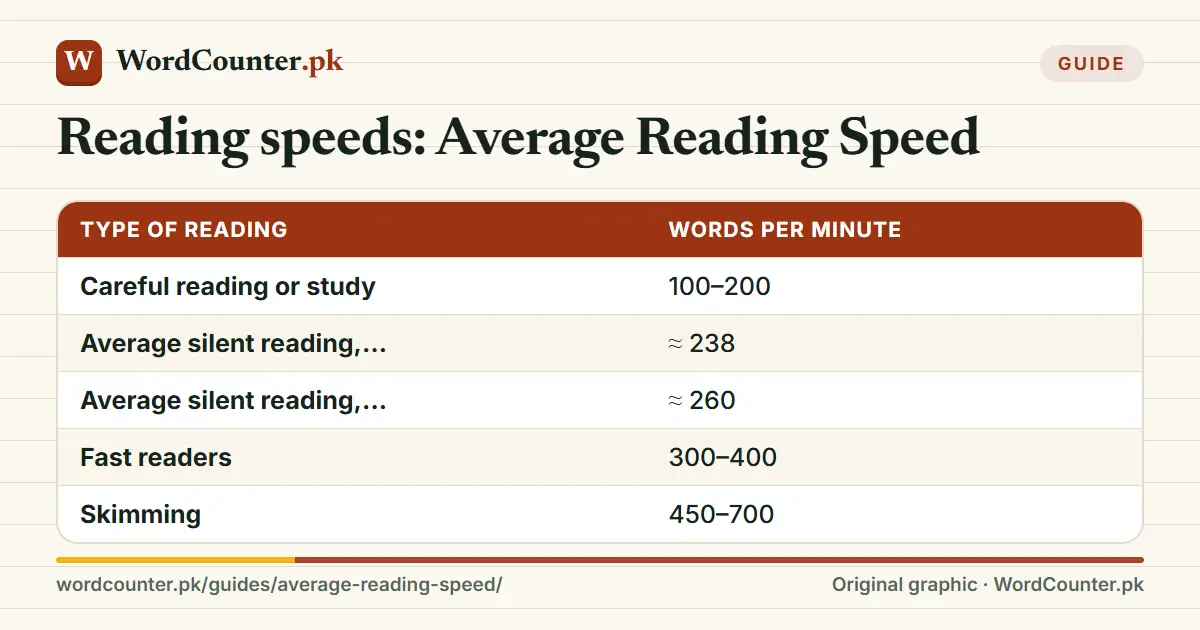
| Type of reading | Words per minute |
|---|---|
| Careful reading or study | 100–200 |
| Average silent reading, non-fiction | ≈ 238 |
| Average silent reading, fiction | ≈ 260 |
| Fast readers | 300–400 |
| Skimming | 450–700 |
| Reading aloud | ≈ 150 |
The 238 and 260 figures come from a 2019 meta-analysis of studies of silent reading in English by adults. They are averages across many readers and texts, not targets.
What affects speed
- Text difficulty: technical text, dense maths or unfamiliar vocabulary slows reading.
- Language and script: speeds differ by language; second-language readers are slower.
- Purpose: studying for a test is slower than reading for pleasure.
- Medium: reading on screens is often a little slower than on paper.
- Reader skill and age.
Using reading speed
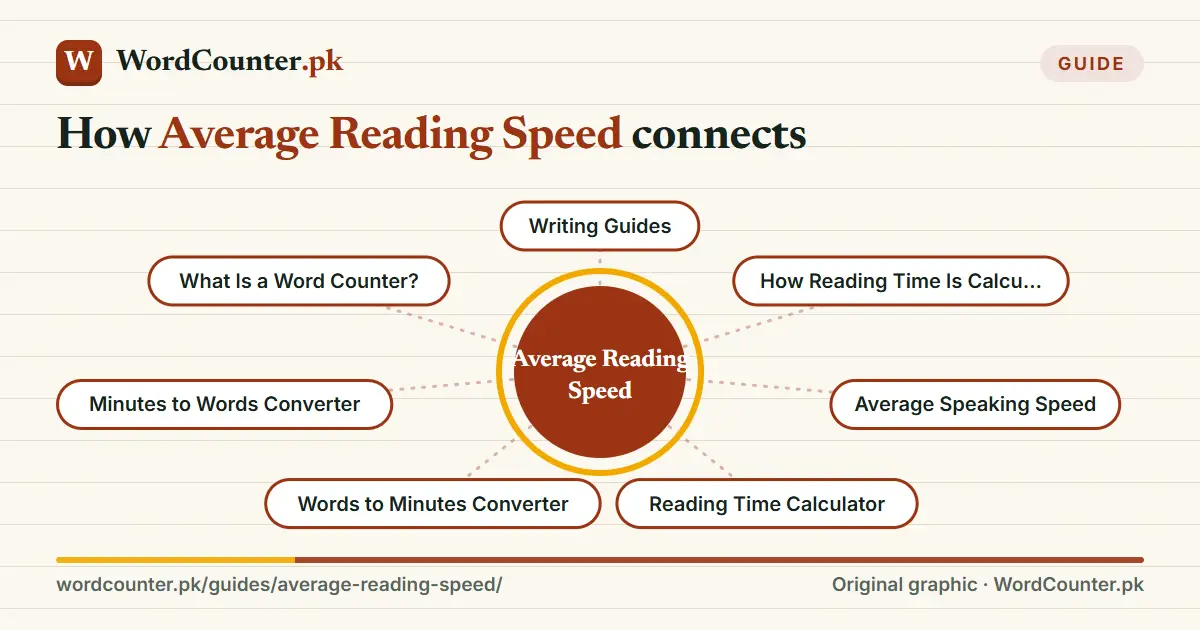
Content teams use reading speed to estimate “X min read” labels; teachers use it to plan assignments. Divide a word count by the speed to estimate time: 2,380 words is ten minutes at 238 wpm. The Reading Time Calculator and Words to Minutes Converter do this for you; How Reading Time Is Calculated explains the method and the limits.
Speed reading
Claims of reading thousands of words per minute with full comprehension are not supported by research; at very high speeds, readers skim and retain less. Training can help you read more efficiently, but comprehension, not speed, should be the goal. For Urdu, published norms are limited, so the Urdu Reading Time Calculator uses an adjustable planning pace.
Frequently asked questions
What is the average reading speed?
About 238 words per minute for adult non-fiction.
How long does it take to read 1,000 words?
About four minutes.
Is reading speed lower on screens?
Often slightly.
Can I read faster?
With practice, but comprehension drops at very high speeds.