Typing speed benchmarks
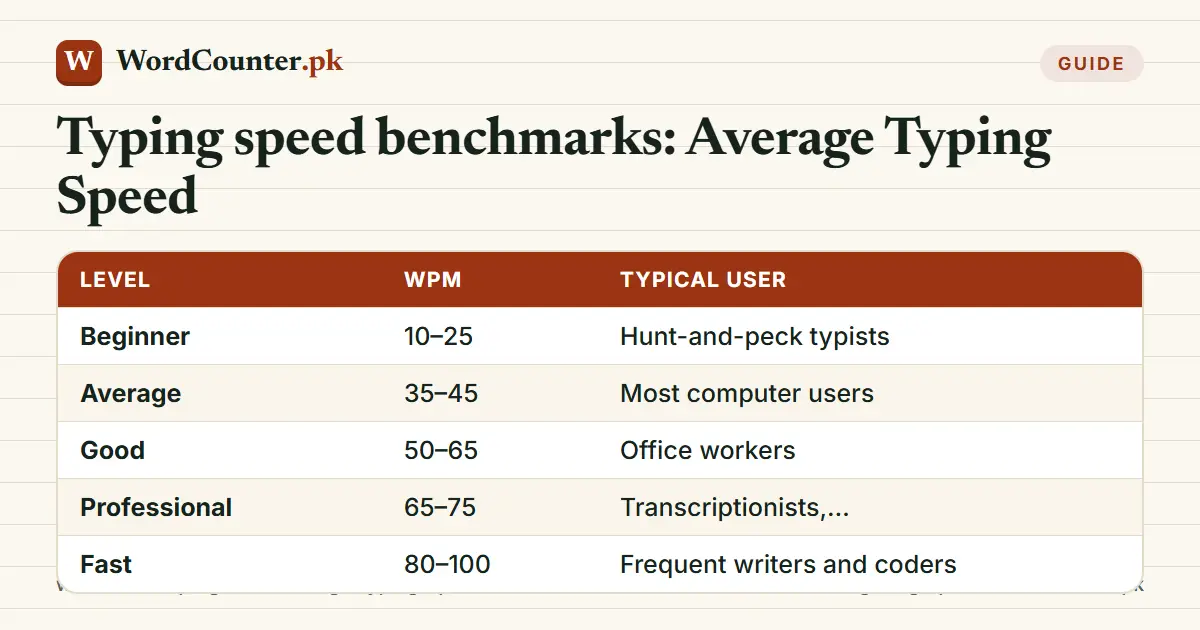
| Level | WPM | Typical user |
|---|---|---|
| Beginner | 10–25 | Hunt-and-peck typists |
| Average | 35–45 | Most computer users |
| Good | 50–65 | Office workers |
| Professional | 65–75 | Transcriptionists, administrative staff |
| Fast | 80–100 | Frequent writers and coders |
| Expert | 100+ | Competitive typists |
How WPM is measured
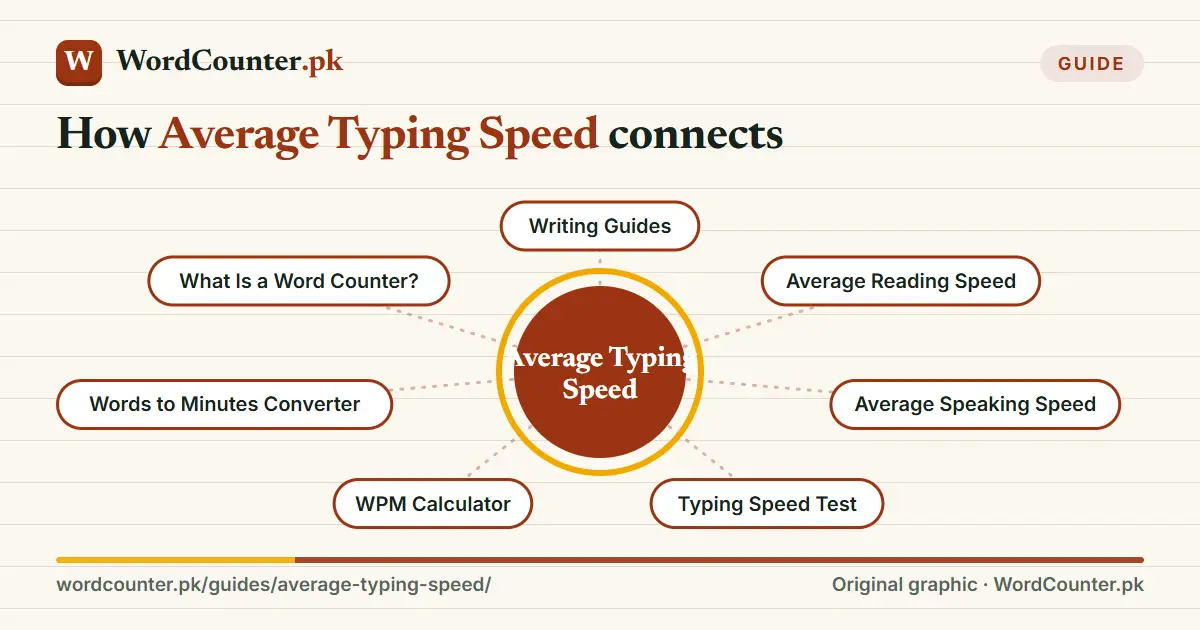
A word in a typing test is five characters, including spaces and punctuation. Gross WPM is characters typed divided by five, divided by the minutes. Net WPM subtracts uncorrected errors, and accuracy is the share of characters typed correctly. Use the WPM Calculator with your own numbers or take the Typing Speed Test to measure yourself.
What typing speed means for writers
Writing is limited by thinking, not typing. At 40 WPM, a 1,000-word draft takes about 25 minutes of pure typing; at 80 WPM about 12 minutes. In practice drafting is slower than copying because of pauses to think. Faster typing helps transcription and note-taking more than it helps composition. Compare with how long it takes to read (Average Reading Speed) and say (Average Speaking Speed) the same words.
How to improve
- Learn touch typing; do not look at the keyboard.
- Practise accuracy first; speed follows.
- Use short daily sessions of 10 to 15 minutes.
- Type real text, not just drills.
- Keep good posture and hand position to avoid strain.
Frequently asked questions
What is a good typing speed?
50 to 65 WPM for office work.
What is the world record?
Competitive typists exceed 200 WPM for short bursts on specialised tests.
Does accuracy matter?
Yes; net WPM subtracts errors.